
Lifting
The Complete Guide to Thread Lifting — From Results to Choosing a Clinic
2026-04-10

Searching for thread lifting can be confusing because there is so much information. I will summarize everything you are curious about in one go, from the types of threads to the duration of results and side effects.
Three-sentence summary
Thread lifting is a non-surgical procedure that inserts dissolvable threads into the skin to simultaneously induce physical lifting and collagen regeneration.
Depending on the type of thread (PDO, PCL, PLLA, cog thread) , the duration of effect is 1 to 2 years , and the effects and characteristics vary significantly.
Since the results depend heavily on the practitioner's experience and skill, sufficient consultation and choosing a trustworthy clinic are the most important factors.
Table of Contents for this Content
What is thread lifting?
Characteristics of each yarn type
Expected effects
Maintenance period
Side Effects and Precautions
Hospital Selection Checklist
1. What is thread lifting?
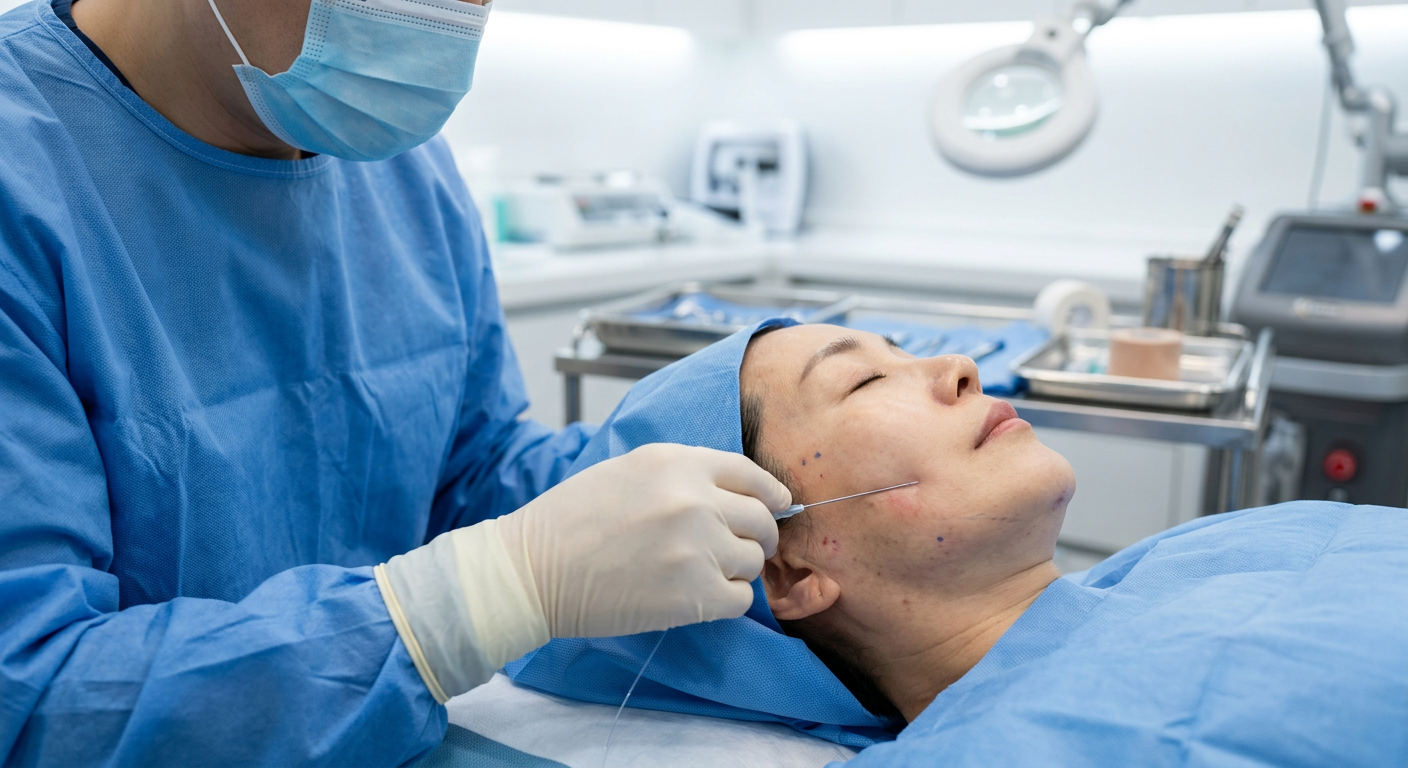
Thread lifting is a procedure that involves inserting dissolvable threads into the skin to physically lift sagging tissue while simultaneously inducing collagen production.
Although it is commonly classified as a 'non-surgical lifting' because it does not use a scalpel, it is an invasive procedure that involves penetrating deep into the skin with a needle. The procedure takes approximately 30 minutes to 1 hour , and in most cases, you can return to your daily activities on the same day.
Key Principle: The lifting effect works simultaneously with the collagen regeneration effect that occurs as the threads dissolve.
2. Characteristics by Yarn Type
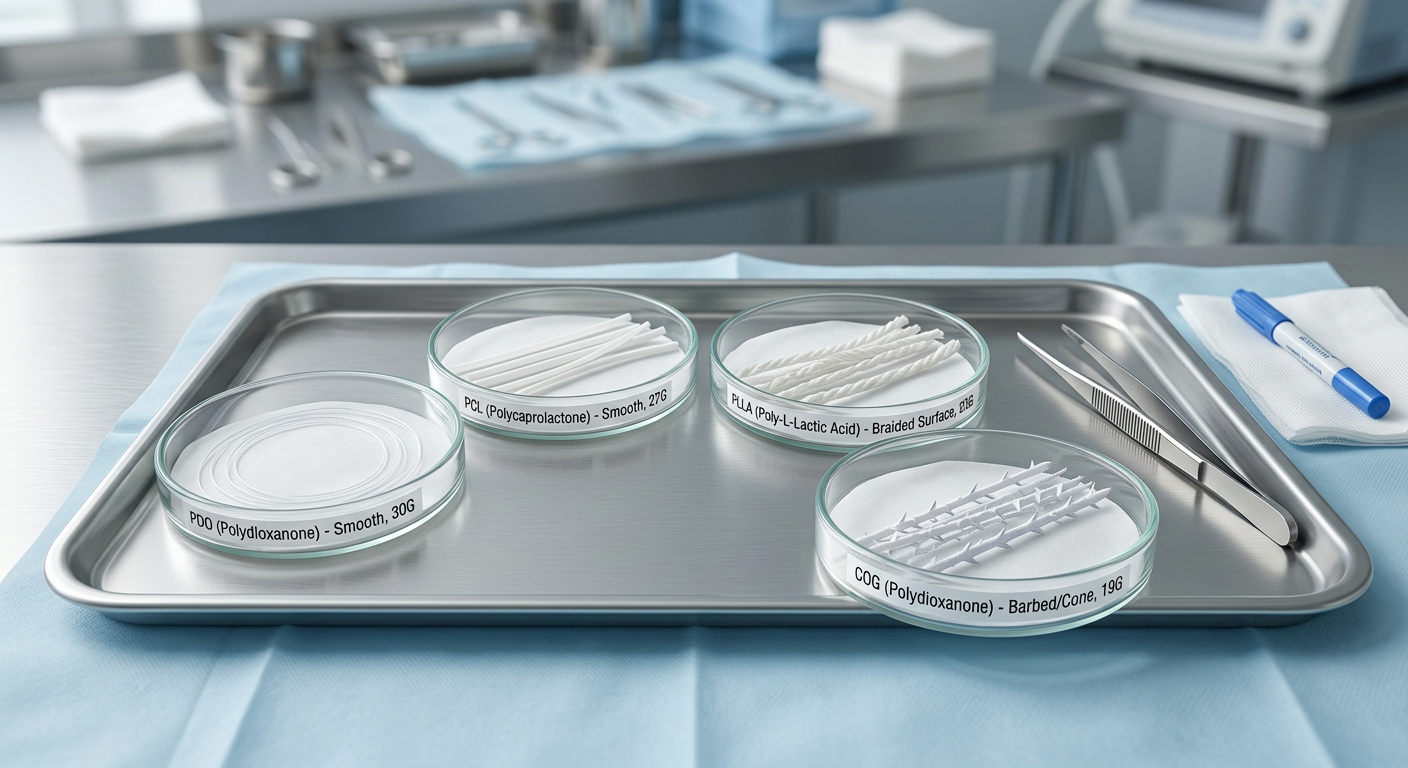
The results of thread lifting vary significantly depending on the type of thread used. Currently, there are four main types of threads used in Korea.
PDO (polydioxanone)
Features: The oldest material, a component that was also used as surgical sutures
Absorption period: Approximately 6 to 8 months
Maintenance period: 1 to 1.5 years
Advantages: Relatively inexpensive, collagen-stimulating effect
Recommended for: Those whose primary goal is skin elasticity or those experiencing thread lifting for the first time.
PCL (Polycaprolactone)
Features: Slower absorption rate and longer duration than PDO
Absorption period: Slowly records for over 2 years
Duration: Approximately 2 years
Advantages: Consistent stimulation of collagen production, currently one of the most chosen materials
PLLA (Polylactic Acid)
Features: Material specialized for collagen stimulation
Onset of effect: Appears after 2–3 months
Strengths: Excellent for restoring skin volume and improving elasticity
Pros: Natural and long-lasting
COG (Cog) room
Structure: Barb structures are present on the surface of the thread.
Principle: A method of physically lifting the tissue
Advantage: Has the strongest immediate lifting effect
Caution: The practitioner's skill level is more important than with other threads.
3. Expected effects
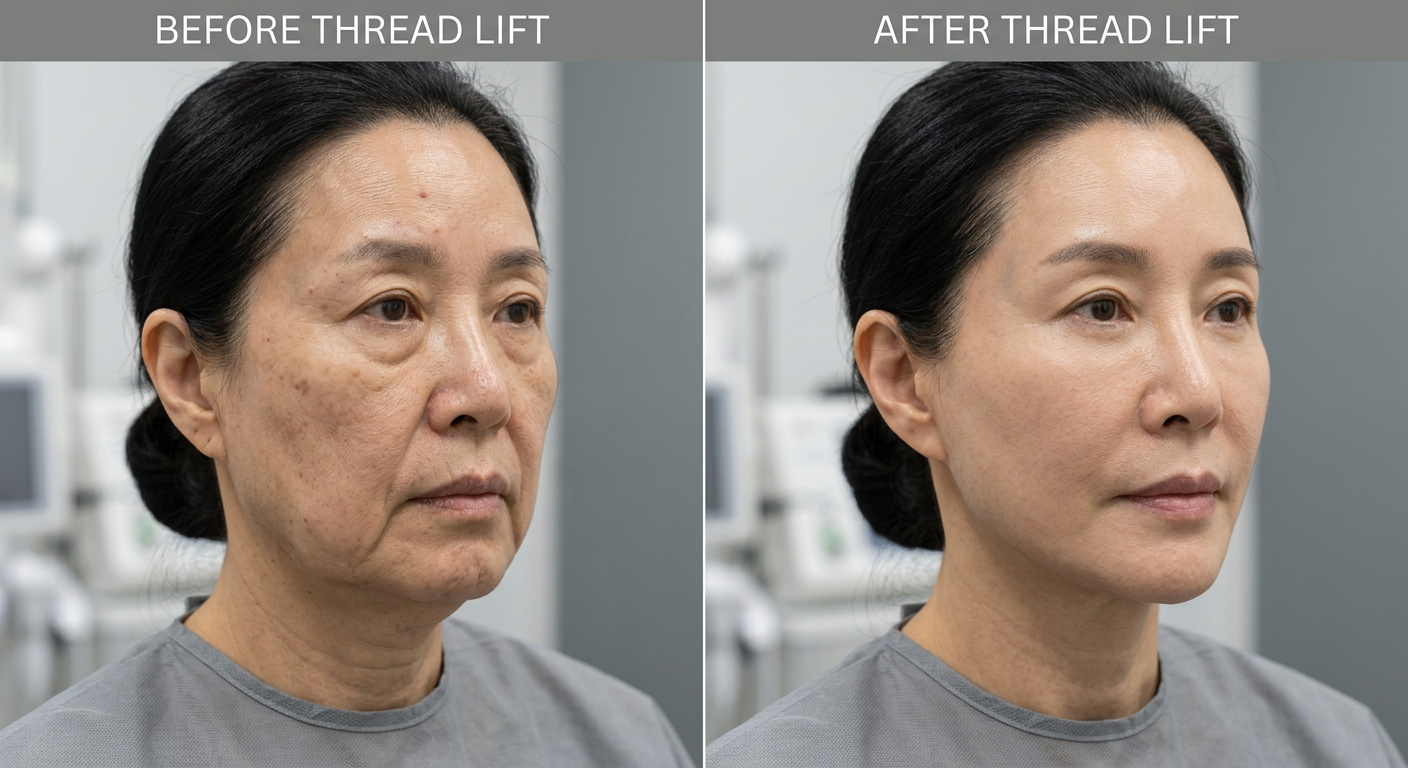
The cases where thread lifting is actually suitable are as follows.
Suitable case
When the boundary between the cheeks and jawline starts to blur
When nasolabial folds deepen
When the corners of the eyes or eyebrows start to droop
When you feel like your overall facial elasticity has decreased
Case with limitations
If skin sagging is very severe or volume loss is extreme, it is difficult to expect sufficient improvement with thread lifting alone. In such cases, it may be necessary to combine or consider fillers or surgical lifting .
Effect Onset Process: Immediate lifting right after the procedure → Improvement in skin texture and elasticity through collagen regeneration over the next 2–3 months
4. Maintenance period
The retention periods by thread type are summarized as follows:
Types of thread | Period of absorption in the body | Duration of effect |
|---|---|---|
PDO | 6~8 months | 1~1.5 years |
PCL | 18~24 months | 1.5 to 2 years |
PLLA | 12~18 months | 1.5 to 2 years |
COG | Varies depending on the material | 1~2 years |
Note: Individual differences apply. The duration of the effect varies depending on individual skin condition, age, lifestyle, and the treatment area and amount.
5. Side Effects and Precautions
Although thread lifting is a non-surgical procedure, since it involves inserting threads into the skin, you must be fully aware of the potential for side effects before making a decision.
common reactions
It is a normal reaction to experience swelling, bruising, and tightness for 1 to 2 weeks after the procedure. In most cases, they subside naturally.
Side effects requiring caution
Thread exposure: Cases where the thread protrudes from the skin.
Rough surface: When the insertion direction is not uniform
Infection or hematoma: Occurs rarely
The stronger the physical lifting strength of the thread, such as a cog thread, the more the results differ even if the insertion position or depth is slightly off. For this reason , the practitioner's anatomical understanding and experience have a significant impact on the outcome of thread lifting.
Post-procedure care
Activities to Avoid: Avoid strenuous exercise, saunas, and alcohol for 2 to 4 weeks after the procedure.
Precautions: Refrain from rubbing or massaging the treated area vigorously during the initial period.
6. Hospital Selection Checklist
Thread lifting procedures vary by clinic in terms of the type of thread used, the number of threads inserted, and the method used. Please check the criteria below first, rather than focusing on price or promotions.
 Is sufficient consultation provided? Check if they carefully examine your skin condition and the degree of sagging, and then explain the appropriate type and amount of thread.
- Is the doctor performing the procedure clear? It is important to verify that the consulting doctor and the doctor performing the procedure are the same and that they have sufficient experience.
- Transparent disclosure of thread information: Hospitals that clearly inform you of which threads to insert and how many are highly trusted before the procedure.
- Is there a side effect response system?: Also, check if there is a post-procedure care system in place to respond quickly if problems arise.
Thread lifting is a procedure where the results can vary significantly depending on who performs it and how it is done, even if it is the same treatment. It is recommended to prioritize the practitioner's experience and the quality of the consultation over price or promotional events.
This content summarizes general information regarding thread lifting procedures and does not constitute a direct recommendation for any specific procedure or product. Please be sure to consult thoroughly with a specialist before deciding whether to undergo the actual procedure.


