
Nose
Complete Guide to Rhinoplasty: From Timing to Recovery
2026-04-10

Rhinoplasty is a surgery that goes beyond simply raising the nose to perfect the proportions and harmony of the entire face. From the timing of the surgery to the selection of implants and recovery—we have organized the essential information you must know step-by-step if you are considering the procedure for the first time.
When would be the appropriate time to receive it?
The first thing to check is whether nasal growth is complete . Nasal bone growth is finished around age 16 for women and age 18 for men. Since the outcome may differ due to subsequent skeletal changes if surgery is performed before growth is complete, it is safer to consider the first surgery after this period. For minors, guardian consent and consultation with a specialist are mandatory.
As the proportion of cartilage tends to decrease and the proportion of bone increases with age, a natural nose tip design utilizing cartilage can be realized more precisely at a relatively young age.
When determining the timing of surgery, the recovery schedule must also be taken into account.
Noticeable swelling : Subsides within approximately 2 weeks after surgery
Return to daily life : It is generally set at one month.
Booking Timing : It is recommended to start a consultation at least 2 to 3 months prior to your return date.
Duration from consultation to surgery : Typically 2 to 4 weeks of buffer time is required.
Finding an approach that fits my nose type

Rhinoplasty is a process of creating harmony within the overall proportions of the face. Since the surgical method varies even for the same low nose depending on skin thickness, cartilage condition, and facial proportions, it is important to first objectively assess the condition of your nose.
Items particularly important to review during specialist consultations:
Asymmetry of the left and right nostrils : Must be reflected during the design phase
Skin thickness : If thick, details are less visible, and if thin, the outline of the implant may show through.
Nasal diseases such as rhinitis and deviated nasal septum : It is advisable to discuss functional correction together with cosmetic surgery.
Types of Implants: Autologous Tissue vs. Artificial Implants
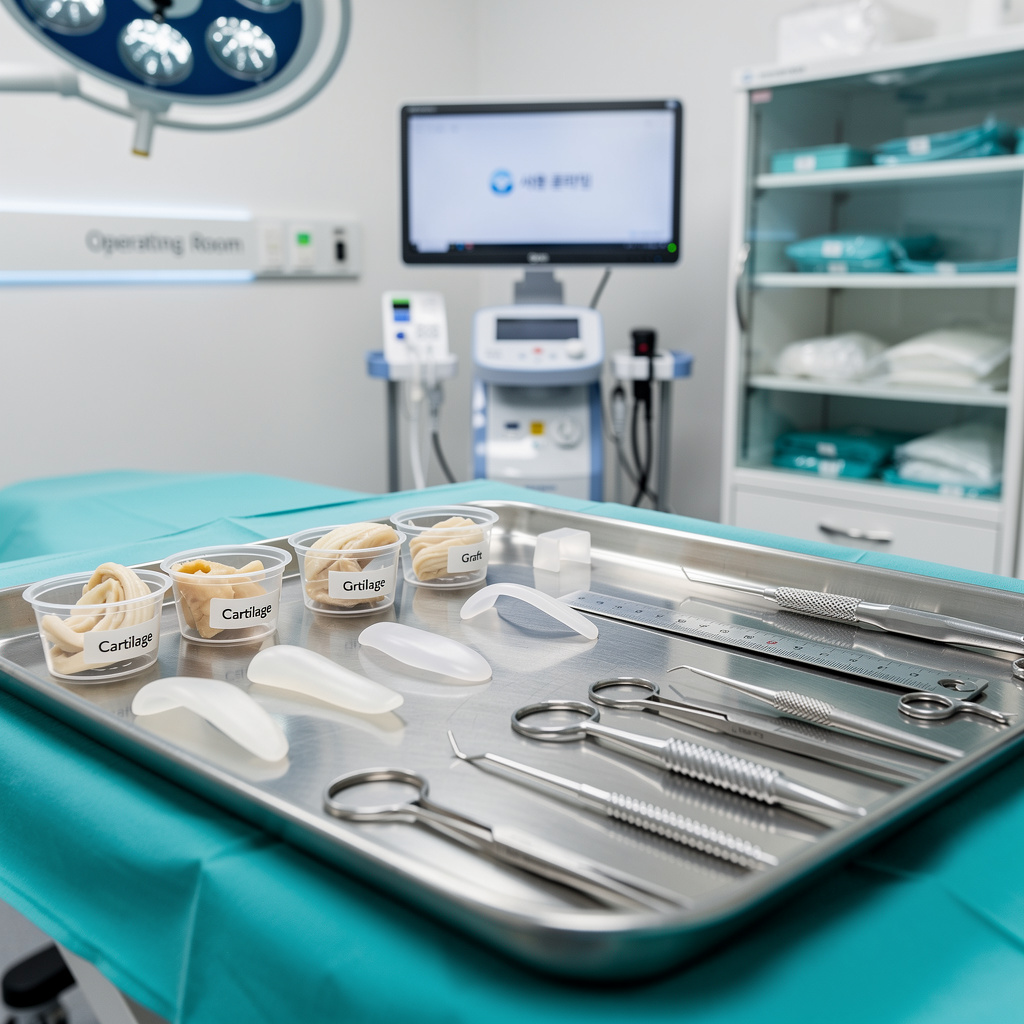
Surgical materials are broadly divided into two types: autologous tissue and artificial implants .
Autologous tissue (autologous cartilage)
Since it is harvested from your own body, there is less risk of rejection, and you can expect natural results. However, some of it may be absorbed over time.
Septal cartilage : Used to raise the tip of the nose or correct a short nose.
Ear cartilage : Its high elasticity makes it suitable for creating a natural-looking nose tip.
Costal cartilage (rib) : Used for revision surgery or when the nasal structure is significantly collapsed; chest scarring may occur.
artificial implants
It is advantageous for stably maintaining the desired height and shape, and is mainly used for forming the bridge of the nose.
Silicone : Excellent shape retention, easy to remove — most widely used
Gore-Tex : Naturally blends with surrounding tissue, soft to the touch — difficult to remove in case of inflammation
Alloderm : An auxiliary material placed over implants to gently smooth the contours.
Raising the bridge of the nose by more than 5mm may make the space between the eyebrows appear narrower , but if it is within the range of 5mm or less, you do not need to worry too much.
Surgical method: Open vs. Closed incision
The rhinoplasty process proceeds in the following order: consultation and design planning → material selection → surgery → suturing and recovery management. Incision methods are divided into two types depending on the scope and purpose of the surgery.
Open Incision : An incision is made in both the inside of the nostril and the nasal septum. Since the internal structures are widely exposed, it is suitable for precision procedures such as cartilage grafting and tissue repositioning. It is selected when the scope of correction is large or when the tip of the nose needs to be finely shaped.
Closed incision : An incision made only inside the nostril without the nasal septum. There are no external scars, and it is suitable for relatively simple surgeries.
Is it possible to correct only the tip of the nose separately?
If the bridge of the nose is normal but the tip appears blunt or wide, or if the tip droops when smiling, correcting the tip alone can make the overall impression look more refined . In such cases, the approach involves using autologous cartilage, such as septal cartilage or ear cartilage, to lift and shape the tip.
How much will it cost?
The cost of rhinoplasty varies significantly depending on the scope of the surgery, the incision method, the materials used, the surgeon's experience, and the size of the hospital.
Low nose correction (bridge + tip package) : Approximately 1 million KRW to 3.5 million KRW
Revision surgery and use of rib cartilage : Costs rise as difficulty increases.
The exact cost can only be confirmed after the surgical method suitable for your nose condition has been determined, so a direct consultation with a specialist is essential.
Recovery Period and Precautions
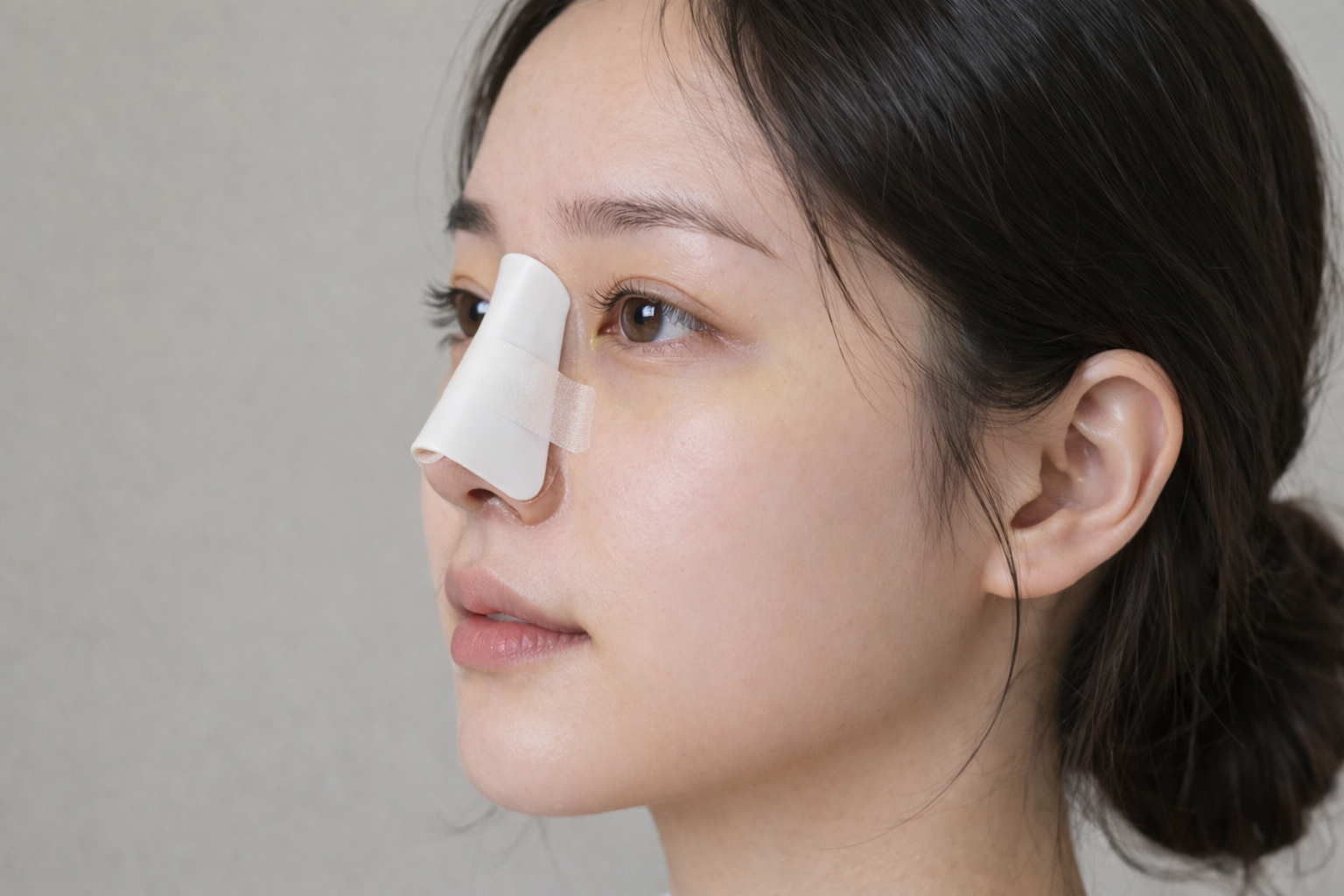
The major flow of post-surgery recovery is summarized as follows.
Within 2 weeks : Most noticeable swelling and bruising removed
1 month : Able to return to daily life
6 months : Final stabilization of nose shape
Since post-operative care determines the quality of the results, it is important to strictly follow the precautions during the recovery period.
If you are considering your first surgery, a natural design that prioritizes harmony with the entire face over dramatic changes is often more advantageous in terms of satisfaction. Ultimately, the most important thing is to thoroughly discuss with a specialist the method best suited to your nose condition.

